
Ramen Party Reflections
The birthday request
Hello readers and welcome back to Let Him Cook!
I had the pleasure of hosting my friend’s birthday party (Happy Birthday again, Darwin). He requested a ramen dinner party.
I love ramen too so it was a great reason to put in some reps and rethink how I would approach making ramen at a scale within the limits of my home kitchen.
My friends can eat a lot so I decided to make at least two types of ramen; Ichiran tonkotsu (pork soup) style ramen and a miso toripaitan (white chicken soup) ramen, and enough for seconds of both bowls if they wished.
So prep for the evening in the days prior included:
Making the tonkotsu and toripaitan soup base (each one evening) - this can be done 3 days in advance
Making the pork and chicken chashu - this must be done at least one day in advance as the meat needs to set and cool in the fridge to make cutting easier.
Preparing ramen sauces - this can be done within the week prior.
Gyoza - filling to be prepared the night before and wrapped on the day of.
Procurement of other toppings - soft boiled eggs, bean sprouts, microgreens and other toppings could all be done on the day of.
Soup prep
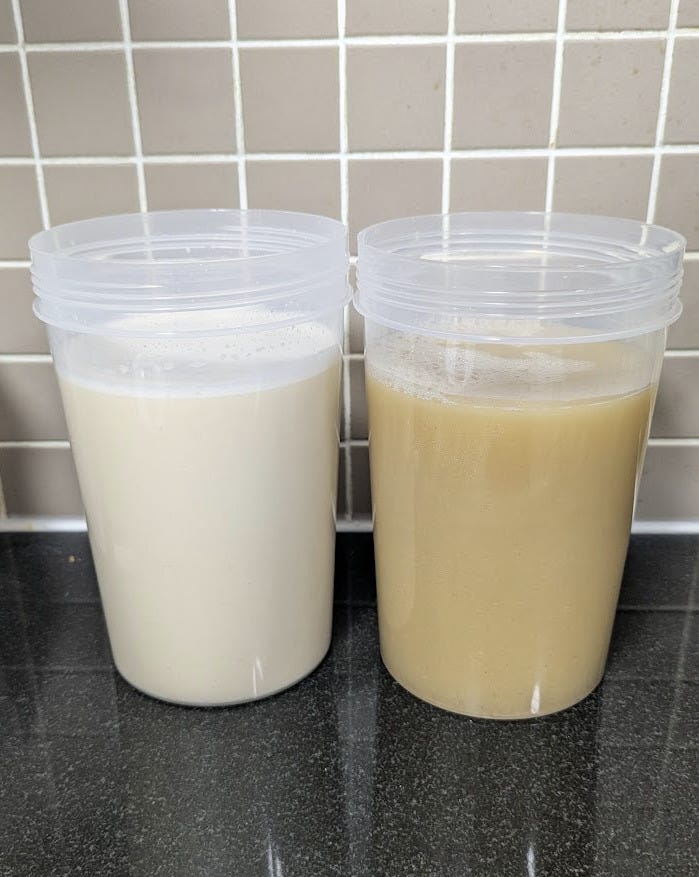
For each serving of ramen, approximately 300ml of soup base is required. That means I needed to prepare about 3L of tonkotsu and toripaitan.
My standard recipes for either make about 1.5L - the tonkotsu needs 2kg of pork neck bone and 1 pork trotter and the toripaitan needs 2kg of chicken neck and any other bones I have collected from my cooking.
Soup making requires some upfront effort with the majority of the cook time being inactive. Here are some tips I think are good to know:
If you have a pressure cooker, use it - it cuts down your cooking time considerably up to a factor of four. Tonkotsu in particular uses really tendonous, fibrous cuts so leveraging this time machine can save a lot of time (and money for your electricity/gas bill). If you don’t have one, you’ll need to boil your soup up to 8 hours while topping up the soup to ensure it doesn’t reduce too far.
The aggressive hard boil to reduce and emulsify the soup is best done with a good pot that has a thick base to distribute heat well. Be careful when using thin aluminium pots, hot spots form and can easily burn the thick coagulating portions of soup if you don’t stir often.
After your soup is made, hit it with a stick blender to amp up your emulsion. It’s incredible how milky and creamy the soup can become.
Chashu prep
Here’s a nice trick for efficiency. I realised you can save time by cooking your chashu in your tonkotsu soup broth. You need to cook it for a long time anyway so may as well do it at the same time, tenderising while also contributing rendered fat to the broth.
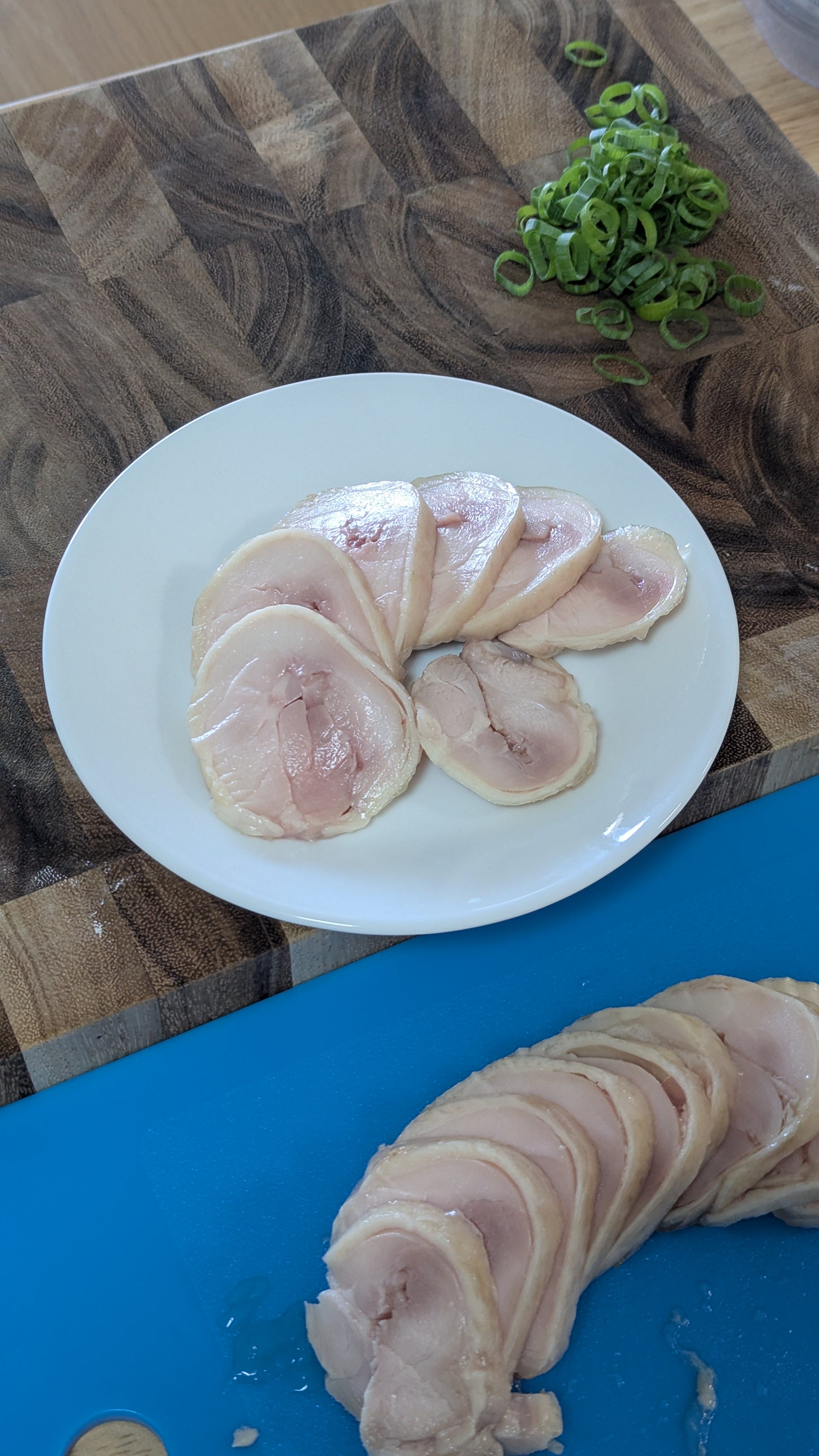
Besides the usual pork chashu, I made chicken chashu for the toripaitan ramen. A quick run through of the recipe:
I made a 1L brine with 4% salt and 2% sugar. I also simmered an onion and carrots to extract some vegetal sweetness. Once cooled, I added some skin on boneless chicken thigh and marinated for 6 hours.
Using plastic wrap, I firmly rolled up two chicken thighs into a log, skin side on the outside. Tied both ends of the plastic and put into another plastic ziplock bag before sous vide-ing for 60C for 2 hours. Afterwards straight into ice water to gelatinize the skin before allowing it to rest in the fridge overnight.
I was genuinely surprised how well this turned out, so tender and bouncy. The only thing I would change is reducing the salt to 3% as the ramen soup is so flavourful and less salt overall is probably a good thing.
On the of day service
Thinking back on the ramen prep, I think I did a great job adjusting my mindset and being a bit more pragmatic about how to cook at scale in a home kitchen.
We’ve all seen videos of ramen made in restaurants, individual portions in isolation; Each bowl, tare is poured in before soup is then poured on top. Large noodle boiling machines that allow multiple noodle strainers to boil individual portions of ramen. It makes sense, it’s a professional business with professional equipment.
I definitely got caught up in the idea of serving with the same process but it is not friendly to the small home kitchen.
The one thing I wanted was for my friends to all enjoy the food together at the same time. I didn’t want to have staggered bowls of ramen arriving at the table. There’s a magic feeling when everyone’s food comes out at the same time and you all share that first bite together.


I’m happy to say that I achieved that with the help of a kitchen scale. My workflow was as follows:
Warm up enough soup for however many portions - number of people x 300ml.
Pre-mix ramen tare into the pot with the soup base. This also allows me to taste the soup before serving and adjust the amount of tare as needed.
Start boiling all the noodles in one big pot at the same time.
Prepare toppings such as cutting soft boiled eggs or torching chashu.
Take a large bowl to hold cooked noodles and tare on the kitchen scale before straining your noodles and placing into the bowl. You now know how much all the cooked noodles weigh.
Some mental maths - cooked noodle weight divided by number of people. While on the scale, start dividing the noodles into each bowl and referencing the total weight as it decreases. e.g. 5 portions weighs 1100g, each portion is 220g. As I’m taking noodles out I know when to stop (880g, 660g 440g, 220g, 0g).
Then follow up with ladling hot soup evenly across all bowls. You don’t need to be so precise with this. Just alternate through all the bowls with best effort.
Follow up with toppings and serve.
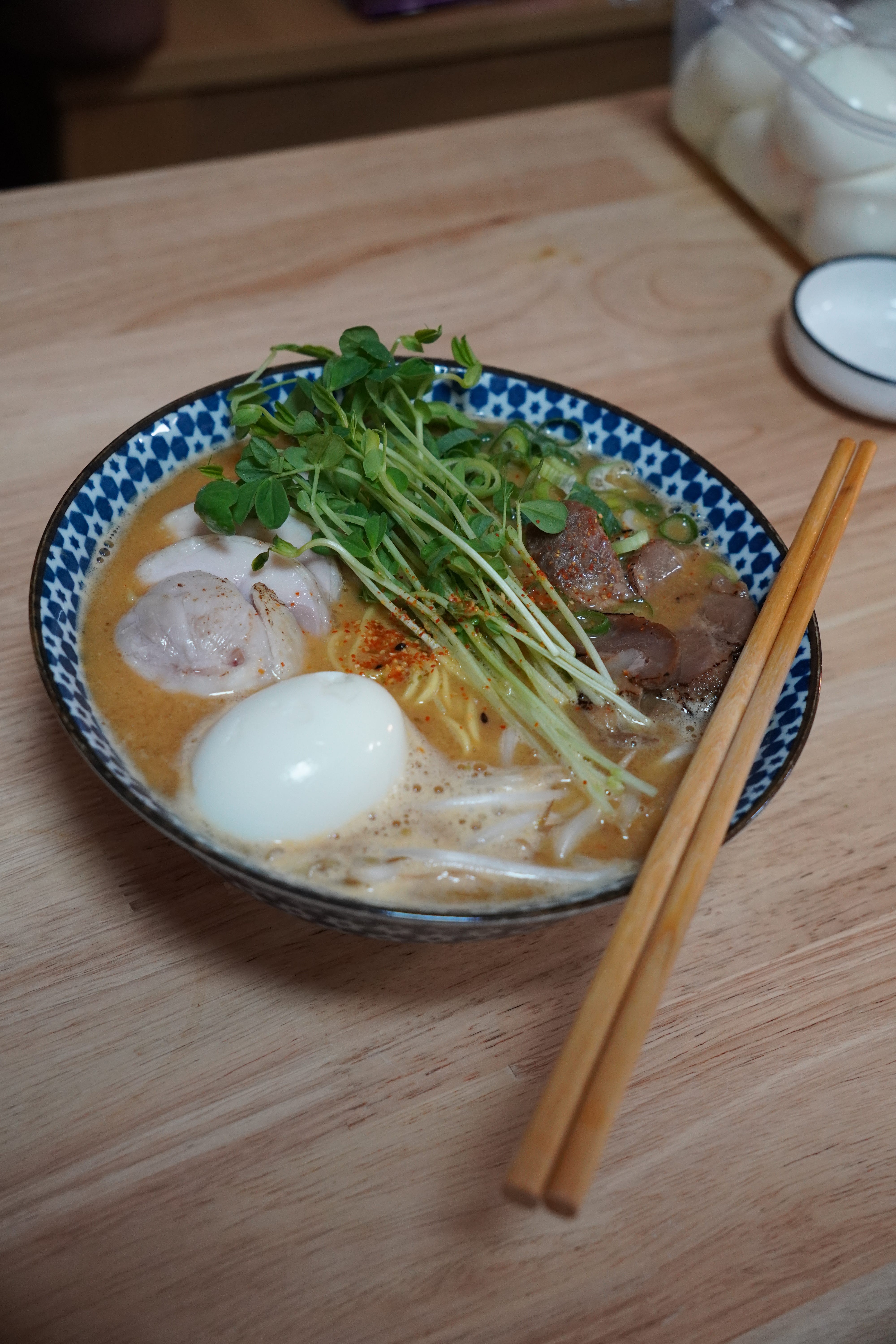
I’m then met with speechless noodle slurping from all my friends. That’s when I know I’ve done something right.
There’s always things to improve and these are some notes I took:
Pre-slicing chashu before cooking the ramen and arranging on a tray for when it’s time to torch and serve.
Pre-portioning bundles of noodles to reduce time spent between bowls.
Having a second pot of water boiling in case friends want a second helping of noodles for their bowl (kaedama).
This time I bought jumbo eggs (900g) but did not account for their increased size when soft boiling. This led to soft eggs that did not peel well and broke. Next time I should have boiled them in smaller batches to maintain the water temperature and boiled for 7 minutes instead of 6 and 1/2 minutes.
Gyoza could have been cooked and served at the same time but I decided to go with it as an entre as I wanted to make sure I did it well. Start to finish it takes approximately 15 minutes so threading it in with the ramen prep is tricky but I’m happy that it turned out delicious.
Once everyone’s well fed and full, it was my turn to have a bowl and wind down. I was quite impressed with the miso toripaitan but I think I understood something my mum had always told me since I was a kid:
“When you spend all day cooking, smelling and tasting the food, then finally see your loved ones eat it and enjoy it, you’re already half full.”
I was already satisfied, one bowl was enough.
Hello all, thanks for reading. If you liked it consider commenting or subscribing to support my work and receive the next newsletter straight to your inbox, for free.
Until then, take care.
Paul.
Phenomenal! Great planning and execution
Your friend is so lucky to have you as a friend! This looks amazing